Lookup here …
Micropython & HD44780 LCD
Introduction
The HD44780 is a very common and versatile liquid crystal display (LCD). It’s widely used in various electronic devices, including calculators, digital clocks, meters, and many more.
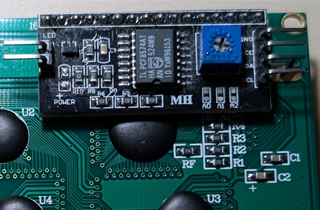
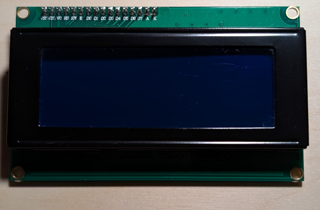
Example: How to use an HD44780 (I2C)
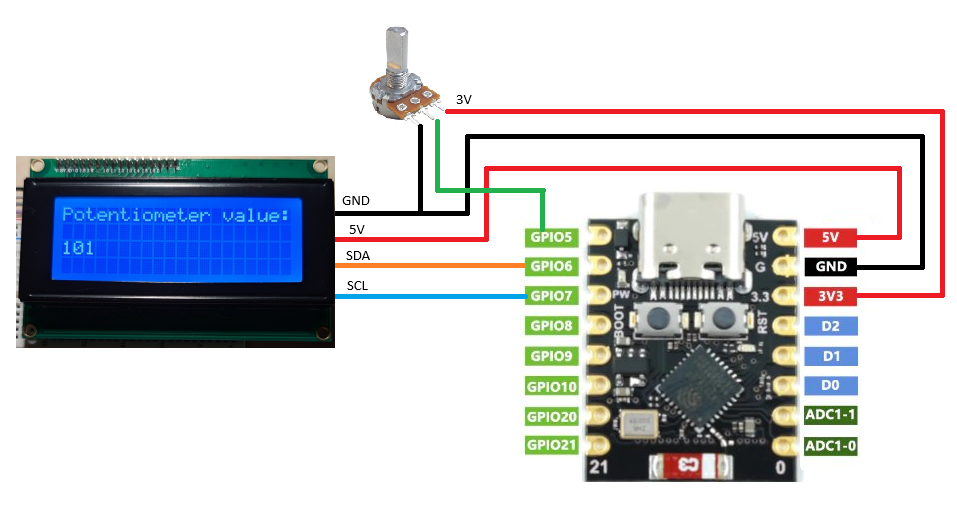
Wiring
Code
Find the LCD library at: https://github.com/dhylands/python_lcd/tree/master
from machine import Pin, SoftI2C, ADC
from i2c_lcd import I2cLcd
from time import sleep

oldVal = 0
newVal = 0

# Define the LCD I2C address and dimensions
I2C_ADDR = 63
I2C_NUM_ROWS = 4
I2C_NUM_COLS = 20

# Define pin 5 for analog reading
pot = ADC(Pin(0))
pot.atten(ADC.ATTN_11DB)       #Full range: 3.3v

# Initialize I2C and LCD objects
i2c = SoftI2C(sda=Pin(6), scl=Pin(7), freq=800000)
lcd = I2cLcd(i2c, I2C_ADDR, I2C_NUM_ROWS, I2C_NUM_COLS)

# Clear the display and set the cursor left,top
lcd.clear()
lcd.move_to(0,0)

try:
    while True:
        for i in range(0,30):
            pot_value = pot.read()
            newVal += (pot_value >> 4)
        newVal = int(newVal/30)
        print(newVal)
        lcd.putstr("Potentiometer value:")
        lcd.move_to(0,2)
        if not newVal == oldVal: # check if the the potentiometer value has changed so LCD is only updated if necessary
            lcd.putstr(str(newVal))
            oldVal = newVal
        else:
            lcd.putstr(str(oldVal))
        sleep(0.1)
        lcd.move_to(0,0)
        lcd.clear()

except KeyboardInterrupt:
    # Turn off the display
    print("Keyboard interrupt")
    lcd.backlight_off()
    lcd.display_off()